
# FastThreadLocal
从jdk ThreadLocal的本身说起
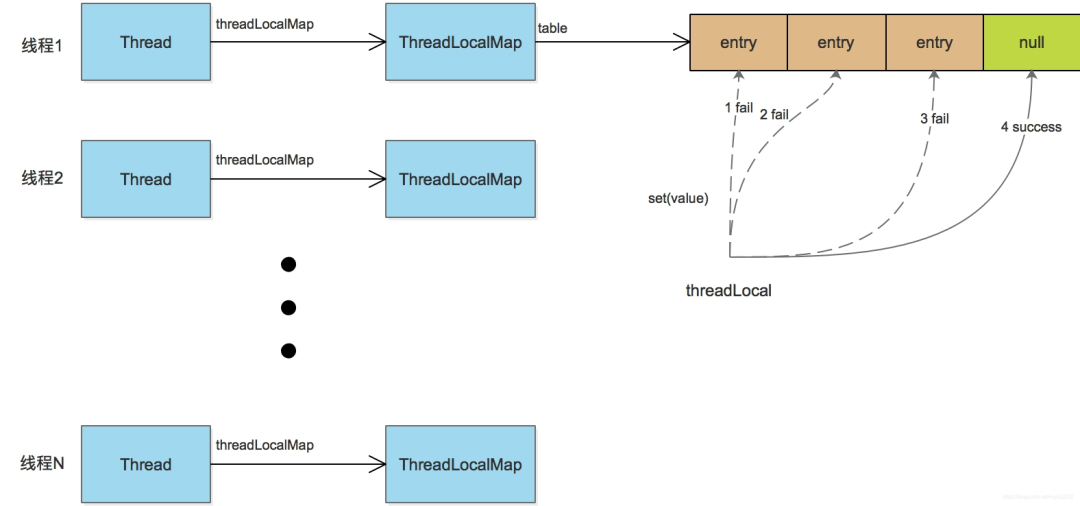
在java线程中,每个线程都有一个ThreadLocalMap实例变量(如果不使用ThreadLocal,不会创建这个Map,一个线程第一次访问某个ThreadLocal变量时,才会创建)。
该Map是使用线性探测的方式解决hash冲突的问题,如果没有找到空闲的slot,就不断往后尝试,直到找到一个空闲的位置,插入entry,这种方式在经常遇到hash冲突时,影响效率。
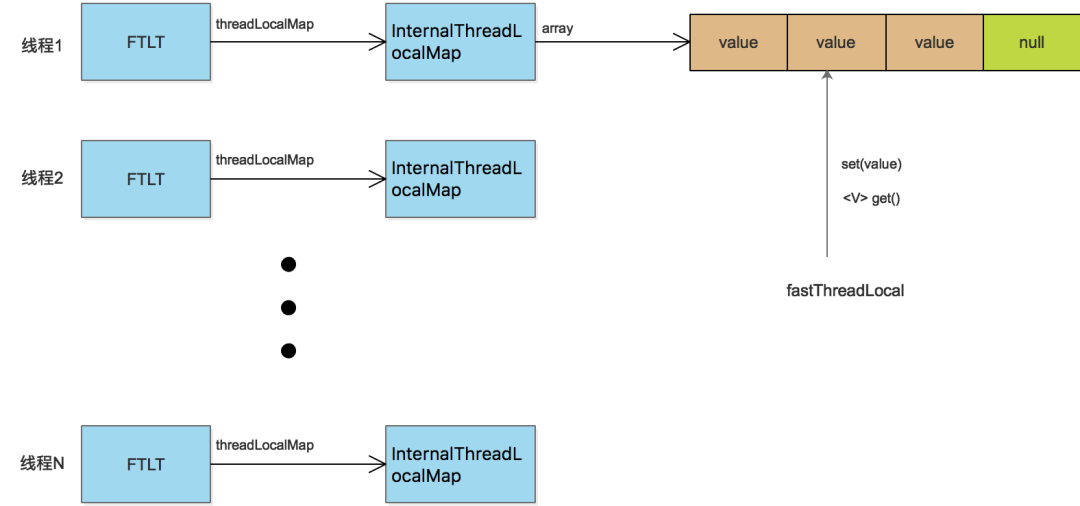
FastThreadLocal(下文简称ftl)直接使用数组避免了hash冲突的发生,具体做法是:每一个FastThreadLocal实例创建时,分配一个下标index;分配index使用AtomicInteger实现,每个FastThreadLocal都能获取到一个不重复的下标。
// PoolByteBufAllocator的内部类PoolThreadLocalCache中:
  final class PoolThreadLocalCache extends FastThreadLocal<PoolThreadCache> {

    @Override
        protected synchronized PoolThreadCache initialValue() {
            final PoolArena<byte[]> heapArena = leastUsedArena(heapArenas);
            final PoolArena<ByteBuffer> directArena = leastUsedArena(directArenas);

            Thread current = Thread.currentThread();
            if (useCacheForAllThreads || current instanceof FastThreadLocalThread) {
              // PoolThreadCache即为各个线程持有的内存块的封装
              return new PoolThreadCache(
                        heapArena, directArena, tinyCacheSize, smallCacheSize, normalCacheSize,
                        DEFAULT_MAX_CACHED_BUFFER_CAPACITY, DEFAULT_CACHE_TRIM_INTERVAL);
            }
            // No caching so just use 0 as sizes.
            return new PoolThreadCache(heapArena, directArena, 0, 0, 0, 0, 0);
        }
    }
1
2
3
4
5
6
7
8
9
10
11
12
13
14
15
16
17
18
19
2
3
4
5
6
7
8
9
10
11
12
13
14
15
16
17
18
19